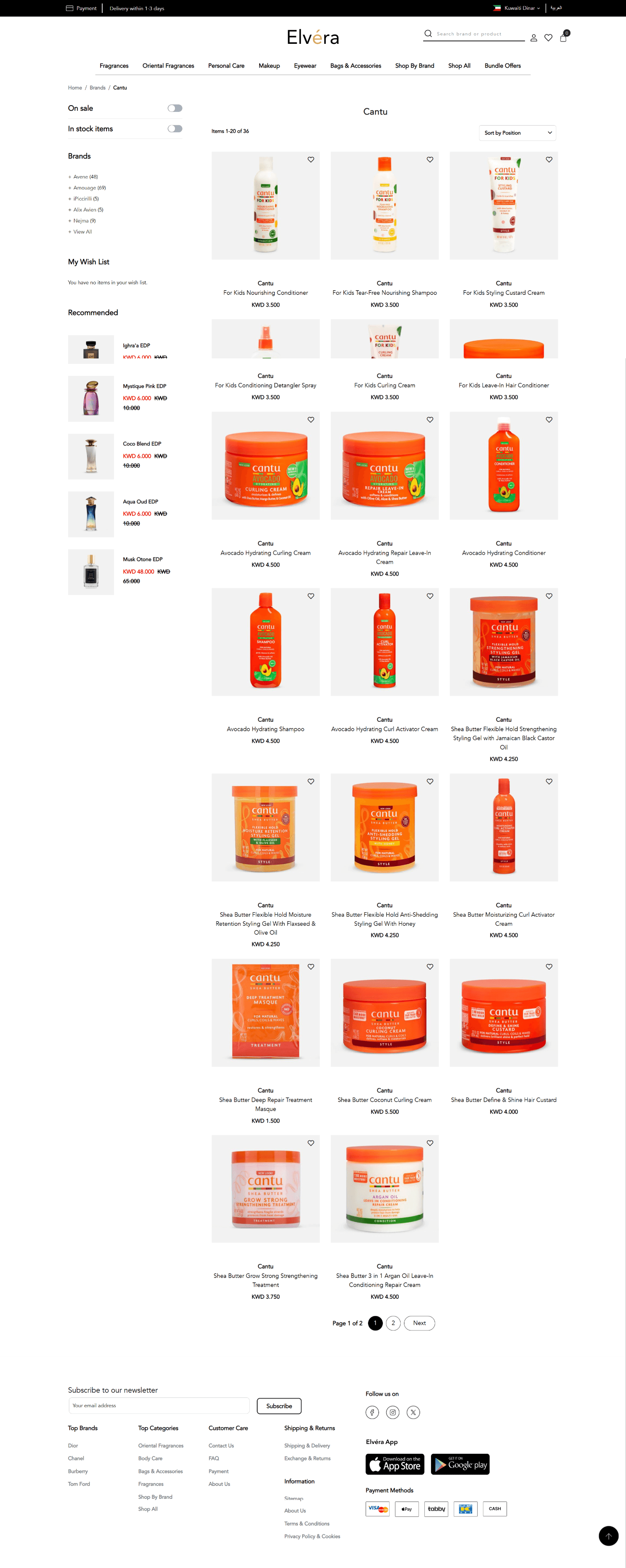
E-commerce Experience Redesign

E-commerce Experience Redesign

A Multi-Category Beauty & Fragrance Retail Platform

A Multi-Category Beauty & Fragrance Retail Platform

A Multi-Category Beauty & Fragrance Retail Platform

A system-level redesign of a multi-category e-commerce platform spanning fragrance, beauty, body, and hair care. The project focused on restructuring the platform’s visual language, navigation systems, and shopping interactions to create a more seamless, intuitive, and scalable user experience.

Solution

My Role

My Role

My Role

Research + Information Architecture + Interaction Design

Research + Information Architecture + Interaction Design

2 months discovery & exploration

4 months design alignment

🖥️

Web

  • Defined discovery challenges and aligned platform goals with user behaviour.

  • Conducted exploratory research on browsing and decision patterns.

  • Defined information architecture and scalable navigation structure.

  • Designed end-to-end commerce journeys across key purchase stages.

  • Developed high-fidelity flows grounded in structural clarity.

🧩
Understanding
Analysing ecosystem complexity and user decision patterns.
🎯
Strategy
Defining direction for scalable discovery and navigation.
🪜
Architecture
Structuring taxonomy and validating core shopping journeys.
🖥️
Execution
Cohesive visual experiences across key journeys.

Understanding

Understanding

An expanding product ecosystem exposed limitations in the platform’s structural foundation.

An expanding product ecosystem exposed limitations in the platform’s structural foundation.

An expanding product ecosystem exposed limitations in the platform’s structural foundation.

As the platform expanded across fragrance, beauty, skincare, grooming, and lifestyle products, the shopping experience evolved without a unified structural approach. Product categories overlapped, navigation patterns became inconsistent, and browsing required increased effort. This made it harder for users to explore confidently and slowed their ability to evaluate and select products.

Understanding the Ecosystem

Understanding the Ecosystem

Understanding the Ecosystem

Before introducing systemic changes, it was essential to evaluate how the platform currently structured product exploration, how users navigated complex category relationships, and how established beauty commerce platforms approached scalability and experience consistency. This phase focused on identifying behavioural friction points, structural misalignments, and opportunities to build a more unified and future-ready commerce framework.

User Behaviour Snapshot

User Behaviour Snapshot

User Behaviour Snapshot

To inform the redesign direction, behavioural patterns in digital beauty commerce were examined to understand how users navigate complex product ecosystems, compare options, and build confidence in purchase decisions. Rather than focusing on static personas, the emphasis was on identifying real browsing behaviours, evaluation triggers, and friction points that shape decision-making across multi-category shopping journeys.


These insights guided the structural logic, interaction models, and experience priorities of the redesigned platform.


AshU1
SandhiyaU1
AshU1
SandhiyaU1

Discovery begins outside the platform

Users often arrive after exposure through social or visual inspiration.

Comparison is central to decision-making

Users actively evaluate products across multiple platforms.

Convenience and experience coexist

Online shopping supports efficiency, while offline supports confidence.

Discovery begins outside the platform

Users often arrive after exposure through social or visual inspiration.

Comparison is central to decision-making

Users actively evaluate products across multiple platforms.

Convenience and experience coexist

Online shopping supports efficiency, while offline supports confidence.

Discovery begins outside the platform

Users often arrive after exposure through social or visual inspiration.

Comparison is central to decision-making

Users actively evaluate products across multiple platforms.

Convenience and experience coexist

Online shopping supports efficiency, while offline supports confidence.

Key Behaviour Signals

Platform Audit

Platform Audit

To establish a grounded redesign direction, the existing platform experience was evaluated across structural, navigational, and interaction layers. The audit focused on understanding how the system supported multi-category browsing, product evaluation, and purchase decision-making at scale.

Rather than isolated usability issues, the assessment revealed systemic inconsistencies that impacted clarity, continuity, and confidence throughout the shopping journey.

Tab 1 of 2: UX Scoring
EfficiencyNavigationconsistencyErrorPrevention andrecoveryScalabilityLearnabilityUX WritingEnd-to-endflows
Tab 1 of 2: UX Scoring
EfficiencyNavigationconsistencyErrorPrevention andrecoveryScalabilityLearnabilityUX WritingEnd-to-endflows

Each usability dimension was evaluated on a 5-point scale

Each usability dimension was evaluated on a

5-point scale

Drag and zoom to navigate the entire process.

View Complete Audit

Competitive Research & Heuristic Analysis

Competitive Research & Heuristic Analysis

Structure & Navigation Systems

Platforms were assessed on how effectively product ecosystems were organised through category hierarchies, cross-navigation pathways, and predictable browsing frameworks.

Decision Support & Interaction Clarity

Evaluation considered how filtering logic, comparison mechanisms, and interaction feedback supported confident progression through complex shopping journeys.

Information Hierarchy & Visual Communication

The review analysed how content structure, visual density, and interface consistency enabled users to interpret large assortments without cognitive overload.

Structure & Navigation Systems

Platforms were assessed on how effectively product ecosystems were organised through category hierarchies, cross-navigation pathways, and predictable browsing frameworks.

Decision Support & Interaction Clarity

Evaluation considered how filtering logic, comparison mechanisms, and interaction feedback supported confident progression through complex shopping journeys.

Information Hierarchy & Visual Communication

The review analysed how content structure, visual density, and interface consistency enabled users to interpret large assortments without cognitive overload.

Structure & Navigation Systems

Platforms were assessed on how effectively product ecosystems were organised through category hierarchies, cross-navigation pathways, and predictable browsing frameworks.

Decision Support & Interaction Clarity

Evaluation considered how filtering logic, comparison mechanisms, and interaction feedback supported confident progression through complex shopping journeys.

Information Hierarchy & Visual Communication

The review analysed how content structure, visual density, and interface consistency enabled users to interpret large assortments without cognitive overload.

To contextualise the redesign direction, established commerce platforms were examined to understand how large-scale product ecosystems balance scalability, clarity, and experiential richness. These observations informed structural and interaction-level decisions shaping the redesigned platform experience.

The embedded review illustrates how structural decisions at the category level influence clarity, exploration flow, and product comprehension.

Drag and zoom to navigate the entire process.

View Complete Analysis

Discovery Insights

Discovery Insights

Discovery Insights

Insights from behavioural patterns, platform assessment, and ecosystem analysis were synthesised to identify systemic factors shaping how users navigate, evaluate, and build confidence in complex commerce environments. This synthesis revealed recurring challenges in structural predictability, decision support, and information clarity, guiding the strategic direction of the redesigned platform experience.

Unpredictable Discovery Structure

As the platform expanded across multiple product categories, navigation frameworks evolved without a unified structural logic. This resulted in fragmented browsing pathways, making it difficult for users to form clear mental models of how products were organised. The lack of predictable navigation patterns increased cognitive effort and reduced overall exploration confidence.

Decision-Centric Browsing Behaviour

Users approach beauty and lifestyle commerce through contextual intent such as needs, occasions, or outcomes, rather than predefined category structures. When platform organisation prioritises internal product taxonomy over user decision frameworks, it creates friction in exploration and slows the evaluation process.

Trust Requires Context

In sensory and experience-driven product categories, confidence is shaped by the depth and organisation of information presented. Users rely on structured content, comparison signals, and meaningful storytelling to reduce uncertainty. When these elements are dispersed or inconsistently presented, decision-making becomes fragmented and less assured.

Dynamic Discovery Journeys

Shopping behaviours often shift dynamically between inspiration, exploration, validation, and intention. Platforms that impose rigid browsing pathways fail to accommodate this natural movement, leading to disrupted experiences. Supporting fluid transitions across different states of intent is critical to enabling seamless and intuitive commerce journeys.

Unpredictable Discovery Structure

As the platform expanded across multiple product categories, navigation frameworks evolved without a unified structural logic. This resulted in fragmented browsing pathways, making it difficult for users to form clear mental models of how products were organised. The lack of predictable navigation patterns increased cognitive effort and reduced overall exploration confidence.

Decision-Centric Browsing Behaviour

Users approach beauty and lifestyle commerce through contextual intent such as needs, occasions, or outcomes, rather than predefined category structures. When platform organisation prioritises internal product taxonomy over user decision frameworks, it creates friction in exploration and slows the evaluation process.

Trust Requires Context

In sensory and experience-driven product categories, confidence is shaped by the depth and organisation of information presented. Users rely on structured content, comparison signals, and meaningful storytelling to reduce uncertainty. When these elements are dispersed or inconsistently presented, decision-making becomes fragmented and less assured.

Dynamic Discovery Journeys

Shopping behaviours often shift dynamically between inspiration, exploration, validation, and intention. Platforms that impose rigid browsing pathways fail to accommodate this natural movement, leading to disrupted experiences. Supporting fluid transitions across different states of intent is critical to enabling seamless and intuitive commerce journeys.

Unpredictable Discovery Structure

As the platform expanded across multiple product categories, navigation frameworks evolved without a unified structural logic. This resulted in fragmented browsing pathways, making it difficult for users to form clear mental models of how products were organised. The lack of predictable navigation patterns increased cognitive effort and reduced overall exploration confidence.

Decision-Centric Browsing Behaviour

Users approach beauty and lifestyle commerce through contextual intent such as needs, occasions, or outcomes, rather than predefined category structures. When platform organisation prioritises internal product taxonomy over user decision frameworks, it creates friction in exploration and slows the evaluation process.

Trust Requires Context

In sensory and experience-driven product categories, confidence is shaped by the depth and organisation of information presented. Users rely on structured content, comparison signals, and meaningful storytelling to reduce uncertainty. When these elements are dispersed or inconsistently presented, decision-making becomes fragmented and less assured.

Dynamic Discovery Journeys

Shopping behaviours often shift dynamically between inspiration, exploration, validation, and intention. Platforms that impose rigid browsing pathways fail to accommodate this natural movement, leading to disrupted experiences. Supporting fluid transitions across different states of intent is critical to enabling seamless and intuitive commerce journeys.

Strategy

Strategy

How to design an experience that supports intuitive exploration, structured comparison, and confident decision-making across a growing multi-category retail ecosystem?

How to design an experience that supports intuitive exploration, structured comparison, and confident decision-making across a growing multi-category retail ecosystem?

How to design an experience that supports intuitive exploration, structured comparison, and confident decision-making across a growing multi-category retail ecosystem?

This phase centred on translating key insights into systemic design principles. This involved redefining how products were grouped, how browsing pathways were structured, and how decision-support mechanisms were embedded throughout the experience to enable both immediate usability improvements and long-term platform scalability.

Defining the Experience Framework

Defining the Experience Framework

Defining the Experience Framework

Methods such as category grouping exercises and card sorting were used to understand natural product associations and validate clearer navigation patterns. These insights informed the development of a unified information architecture that supports intuitive exploration, easier comparison, and more confident decision-making across multiple categories. This structured framework then guided subsequent interaction and interface design decisions, ensuring that visual improvements were grounded in a coherent and scalable system.

Card Sorting

01
Purpose and Context
  • The activity aimed to explore how users interpret connections between products across fragrance, beauty, body, and grooming categories. Understanding these natural associations helped reveal how users mentally structure the platform’s product ecosystem while browsing.
Taxonomy • Mental Models • Category Logic
02
Problem Framing
03
Defining foundations
01
Purpose and Context
  • The activity aimed to explore how users interpret connections between products across fragrance, beauty, body, and grooming categories. Understanding these natural associations helped reveal how users mentally structure the platform’s product ecosystem while browsing.
Taxonomy • Mental Models • Category Logic
02
Problem Framing
03
Defining foundations

This exercise revealed natural grouping patterns that guided the restructuring of the platform’s category and navigation framework.

Drag and zoom to navigate the entire process.

See the Entire Process

Information Architecture

The platform’s information architecture was restructured to create a clearer and more scalable multi-category commerce system. The updated structure simplified category depth, reduced redundancy, and established stronger relationships between product groups across fragrance, beauty, grooming, and accessories. It also aligned navigation with real shopping behaviours by introducing alternative exploration pathways such as fragrance families and concern-based browsing. This approach enables more intuitive product discovery while supporting future catalogue expansion without increasing complexity.

Key Architectural Principles

Progressive exploration depth

The architecture supports layered exploration, allowing users to move from broad category understanding to detailed product evaluation while maintaining contextual clarity throughout the journey.

Meaningful product grouping

Categories were restructured to reflect natural user associations and real shopping contexts rather than internal classification logic, improving navigation predictability.

Scalable structural consistency

The framework establishes repeatable organisational patterns that can accommodate new categories and product expansions while maintaining a coherent experience across the platform.

Progressive exploration depth

The architecture supports layered exploration, allowing users to move from broad category understanding to detailed product evaluation while maintaining contextual clarity throughout the journey.

Meaningful product grouping

Categories were restructured to reflect natural user associations and real shopping contexts rather than internal classification logic, improving navigation predictability.

Scalable structural consistency

The framework establishes repeatable organisational patterns that can accommodate new categories and product expansions while maintaining a coherent experience across the platform.

Progressive exploration depth

The architecture supports layered exploration, allowing users to move from broad category understanding to detailed product evaluation while maintaining contextual clarity throughout the journey.

Meaningful product grouping

Categories were restructured to reflect natural user associations and real shopping contexts rather than internal classification logic, improving navigation predictability.

Scalable structural consistency

The framework establishes repeatable organisational patterns that can accommodate new categories and product expansions while maintaining a coherent experience across the platform.

Drag and zoom to navigate the entire process.

View the IA

Building on the defined structural framework, the redesign consolidated key architectural and interaction decisions into a unified commerce experience direction.

Architecture

Architecture

A cohesive commerce experience designed to bring clarity and fluidity to product exploration across Elvéra’s expanding beauty ecosystem.

A cohesive commerce experience designed to bring clarity and fluidity to product exploration across Elvéra’s expanding beauty ecosystem.

A cohesive commerce experience designed to bring clarity and fluidity to product exploration across Elvéra’s expanding beauty ecosystem.

By establishing a structured discovery framework and refining key interaction flows, the platform supports intuitive browsing, meaningful product evaluation, and seamless purchase progression across diverse categories.

Wireframes

Wireframes

Wireframes

The proposed information architecture was translated into key commerce flows to evaluate how structural decisions support real browsing, evaluation, and purchase behaviours. These wireframes focus on validating navigation clarity, content hierarchy, and interaction continuity across critical stages of the shopping journey before progressing into visual design.

Home Exploration

Home Exploration

The homepage explores how users are introduced to the platform’s category ecosystem through promotional content, sub-category entry points, and recommendation modules. The layout prioritises multiple discovery pathways while maintaining clear hierarchy between campaign-driven exploration and intent-driven browsing.

Product Listing

Product Listing

The listing experience focuses on structured product comparison through filtering, sorting, and contextual grouping. The goal was to reduce cognitive load by enabling users to refine results progressively while maintaining visibility of category context and browsing controls.

Product Details

Product Details

Product detail wireframes prioritise decision support through clear information hierarchy, trust signals, and contextual recommendations. The layout ensures users can evaluate product attributes, pricing, variants, and reviews without losing purchase momentum.

Cart & Purchase Preparation

Cart & Purchase Preparation

The cart experience focuses on transparency and momentum preservation by clearly presenting product summaries, pricing breakdowns, promotional inputs, and checkout progression indicators. Mini-cart interactions were designed to provide quick awareness without interrupting ongoing exploration.

Checkout Experience

Checkout Experience

The checkout journey was structured as a sequential, context-aware flow covering delivery details, address validation, payment selection, and order confirmation. The design accounts for region-specific behaviours such as PACI-based auto-population, payment method availability constraints, and gift purchase scenarios, ensuring task clarity during high-intent conversion stages.

Complete Wireframe System

Complete Wireframe System

Complete Wireframe System

Due to the scale and complexity of the redesigned commerce experience, only key representative flows are highlighted within this case study. The full set of wireframes, covering additional scenarios, edge states, and system interactions, can be explored through the embedded prototype.

Drag and zoom to navigate the entire process.

See the Complete Journey

Designing the Shopping Experience

Designing the Shopping Experience

Designing the Shopping Experience

Each decision focused on removing friction at critical moments, from understanding product options to progressing through checkout. Rather than introducing new features, the emphasis was on simplifying interactions, clarifying information, and ensuring that users could move through the shopping journey without unnecessary interruptions.
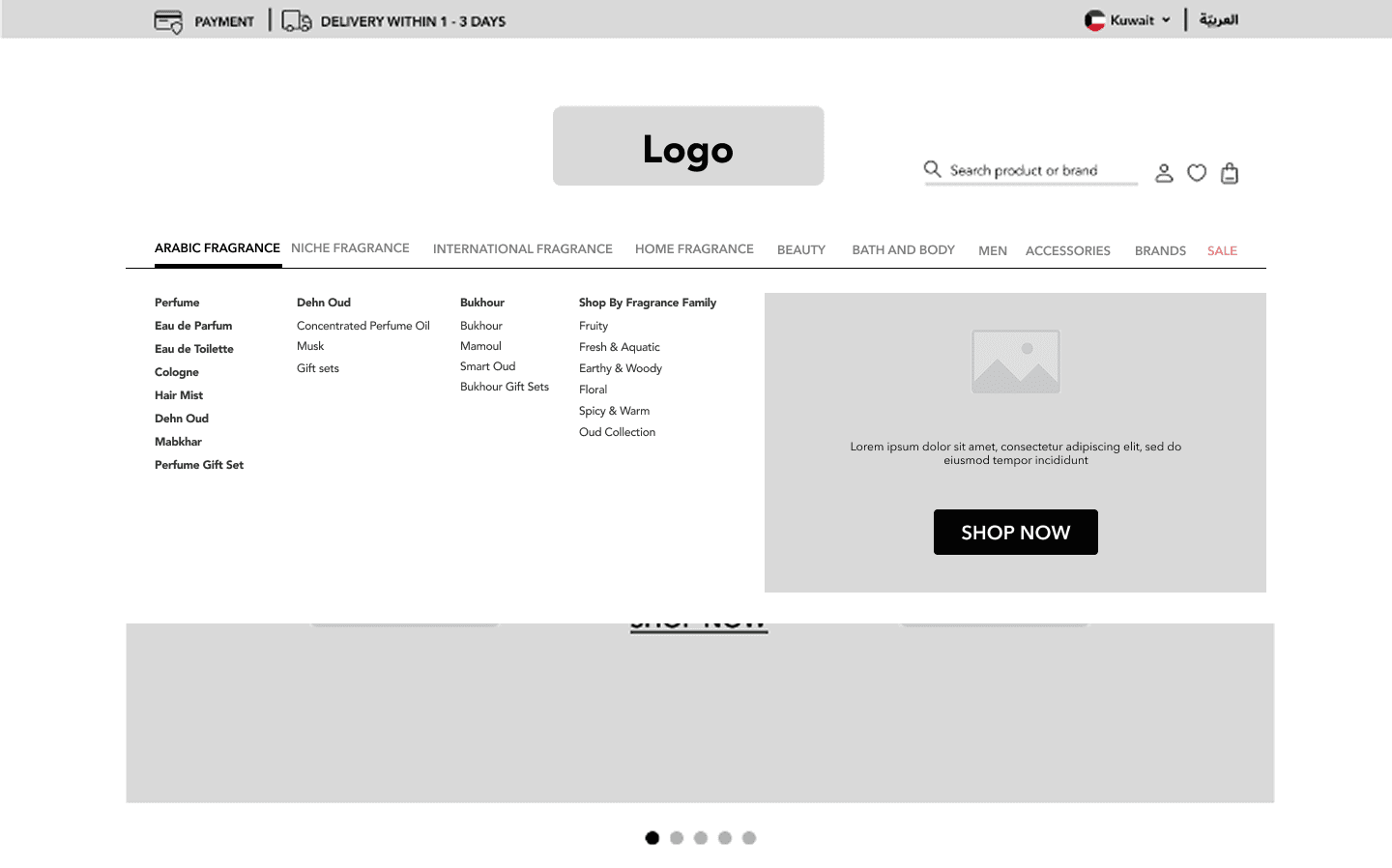
Reel image

Structured exploration over promotional clutter

Rather than prioritising campaign-driven layouts, the navigation and browsing framework was designed to emphasise clear category pathways and contextual product grouping. This approach enables users to build a mental model of the platform while maintaining flexibility in exploration.

Reel image

Structured exploration over promotional clutter

Rather than prioritising campaign-driven layouts, the navigation and browsing framework was designed to emphasise clear category pathways and contextual product grouping. This approach enables users to build a mental model of the platform while maintaining flexibility in exploration.

Execution

Execution

Translating the defined architecture into clear, scalable interaction flows across Elvéra’s core commerce journeys.

Translating the defined architecture into clear, scalable interaction flows across Elvéra’s core commerce journeys.

Translating the defined architecture into clear, scalable interaction flows across Elvéra’s core commerce journeys.

Through iterative refinement of browsing, product evaluation, and checkout experiences, the platform’s structural direction was translated into a cohesive and usable shopping system.

Visualising the Product Interface

Visualising the Product Interface

Visualising the Product Interface

The interface design brings together the structural and interaction improvements introduced earlier, shaping a cohesive visual experience across the platform’s core shopping flows. The focus was on making complex product journeys feel simpler through clear hierarchy, consistent components, and restrained visual expression that supports rather than distracts from decision-making.

Reflections and

Next Steps

Reflections and

Next Steps

Reflections and

Next Steps

The redesign emphasised the role of system-level thinking in improving commerce usability and conversion continuity. Establishing a scalable information architecture and interaction framework helped address friction across browsing and purchase flows, reinforcing the need to prioritise structural clarity before visual refinement. The project also underscored the importance of designing experiences that can evolve alongside expanding product ecosystems and changing user behaviours.


Future improvements would focus on translating the redesigned experience into mobile-first interaction models, validating key decisions through real usage data, and enhancing contextual personalisation to support more relevant product discovery. Strengthening checkout resilience and cross-device continuity would further ensure that high-intent users can complete purchases without disruption as the platform scales.

Up Next,

Another Problem. A Different Constraint.

Up Next,

Another Problem. A Different Constraint.

Furniture Waste Management System

Furniture Waste Management System

Always Open to New Ideas

Let’s work together

Residing

Toronto, ON

copyright © 2026

copyright © 2026

Residing

Toronto, ON

Let’s work together

Always Open to New Ideas

copyright © 2026

Toronto, ON

Residing

Let’s work together

Always Open to New Ideas

Create a free website with Framer, the website builder loved by startups, designers and agencies.